

New York Needs the Freedom to Read Act
Junie B. Jones is a kindergartener with a quick wit and a sassy mouth. She has inspired whole generations of children, including mine, to stand up for themselves, to be assertive, and to meet challenges with humor and resourcefulness. Maybe most importantly, she has inspired them to read books, a skill that is fundamental in the modern world and a pastime that will enrich their entire lives.
Barbara Parks’s “Junie B. Jones” books are some of the most beloved chapter books for young readers ever published. They also turn up surprisingly often on the lists of books banned from libraries in the United States, because some adults consider Junie to be a poor role model for children.
Book banning has been around almost as long as books have been. The United States may pride itself on championing freedom of expression, but book bans have repeatedly been weaponized when certain groups feel their power is under threat. Today, we face another wave of censorship. Across the country, coordinated campaigns have sought to remove thousands of books—more than 4,000 in 2023 alone—including at least 80 here in New York. Books depicting racial injustice or gender nonconformity, books that question religious beliefs or challenge capitalism regularly come under attack. Ironically, the top targets are books like 1984 and The Handmaid’s Tale, cautionary novels about totalitarianism that encourage people to think for themselves and resist mind control.
My bossy and opinionated child, raised on Junie B. Jones, has grown up to be a leader, a hard worker, a problem solver, and an avid reader. I am a firm believer that exposure to a broad range of ideas and experiences, both in life and in literature, makes us stronger, more resilient people. I also have seen how children light up when they discover a character who looks like them, and how helpful it can be – lifesaving, even – to read about someone navigating challenges they have faced. And I believe that school libraries should be resources where all our children can explore new ideas and find inspiration.
That belief is what led me to introduce the Freedom to Read Act (S1099/A7777), which the Legislature passed this year with strong support. The bill affirms that every student in New York should have access to big, inclusive, and developmentally appropriate library collections, and that our certified librarians should be trusted to curate them professionally and responsibly.
What does the Freedom to Read Act mean in practice? Imagine a middle school library with a novel in which a child’s divorced mother falls in love with another woman. Some parents may object and demand the book’s removal. Under this law, they remain free to guide their own children’s reading, but they cannot decide for every child. Local policies – crafted with guidance from State Ed, with input from librarians, teachers, and the community, and ultimately approved by school boards – will make that clear. Parents can still guide their own children’s choices, but they cannot arbitrarily deny other children access to books.
The New York State School Boards Association has already developed a thoughtful model policy for library collection development. It encourages districts to promote critical thinking, respect diversity, and ensure students encounter a wide range of perspectives—including on difficult or controversial topics. It affirms that professional judgment, guided by fairness and intellectual integrity, is essential to building strong collections.
Guidance grounded in this approach will help districts implement the Freedom to Read Act effectively. It should offer a consistent framework without overriding local values. It must protect librarians from political interference, while ensuring school boards and communities play a constructive role. And it can ensure that procedures for challenging a book are transparent, educationally sound, and constitutionally defensible.
I believe deeply that this is what responsible governance looks like: the state sets minimum standards; local boards shape policy in conversation with those standards; and educators use their training and judgment within that framework. It is collaborative, not top-down. It respects local governance while ensuring no student is denied the right to learn because of someone else’s ideology.
I urge Governor Hochul to sign the Freedom to Read Act. Doing so will protect our children’s right to read, empower our librarians, and reaffirm New York’s commitment to education, inclusion, and democracy itself.
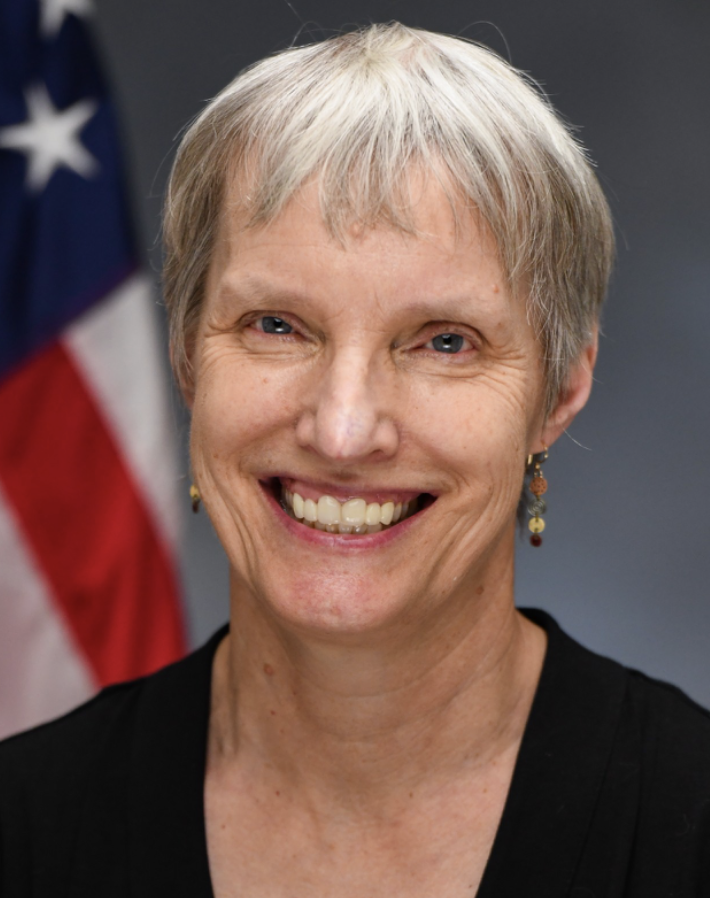
Senator Rachel May represents New York’s 48th State Senate District.
