INDEPENDENT ENGINEERING STUDY FINDS NEW YORK NEEDS $29.5 BILLION OVER FIVE YEARS TO RESTORE STATE PAVEMENTS
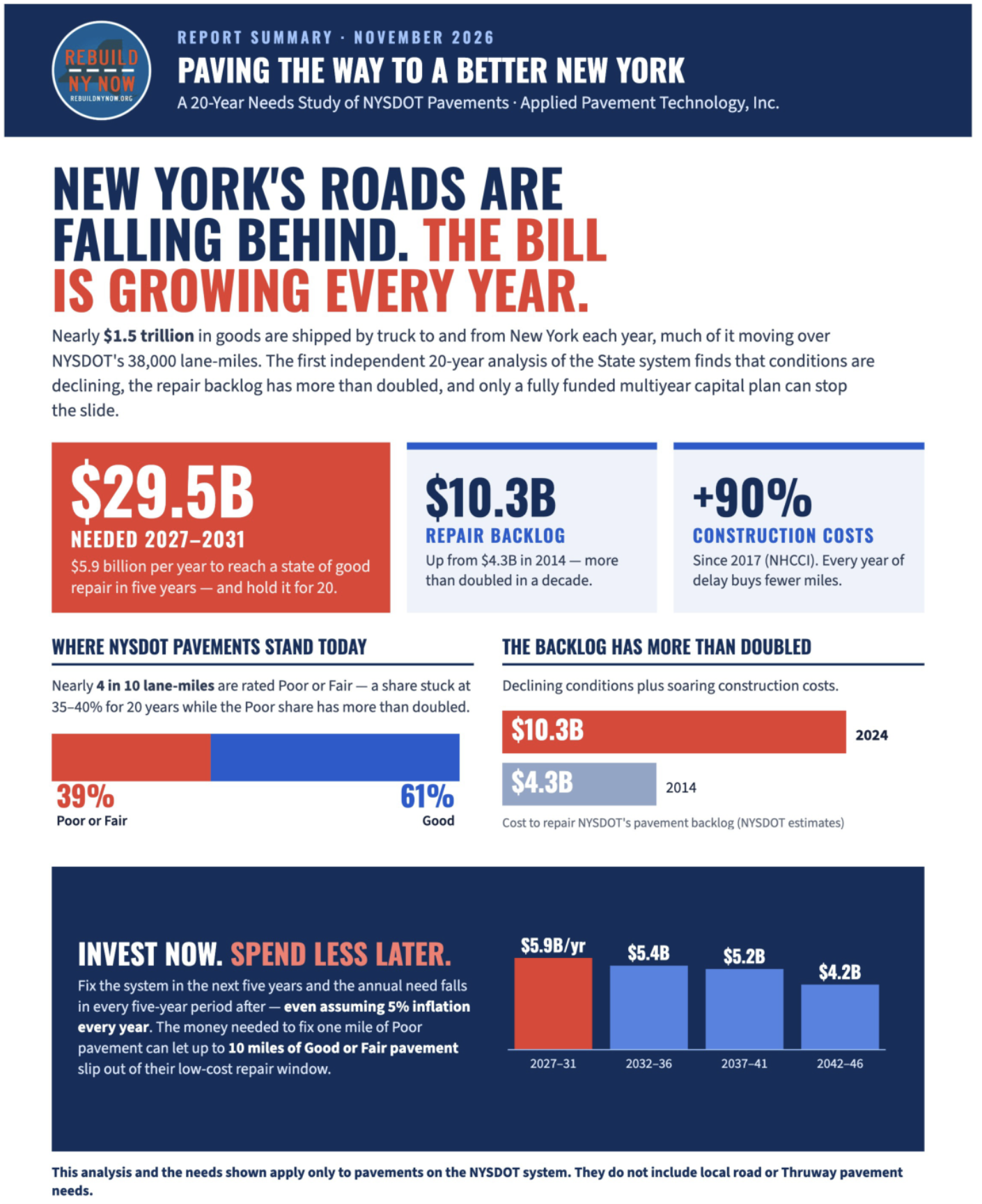
Nearly 40 percent of NYSDOT-maintained lane-miles are rated Fair or Poor, while the pavement repair backlog has grown to $10.3 billion
ALBANY, N.Y. – Rebuild New York Now today released a new engineering-based analysis finding that New York must invest $29.5 billion from 2027 through 2031 to bring NYSDOT-maintained pavements to a state of good repair and sustain that condition over the next 20 years. This need does not account for the nearly 87% of pavements maintained by local municipalities and other public entities, underscoring the substantially broader scope of pavement investment required statewide.
Prepared by Applied Pavement Technology, Inc. using NYSDOT’s pavement-condition methodology and 2024 condition data, the full report evaluates more than 38,000 lane-miles across all 11 NYSDOT regions. It models pavement deterioration, the treatments appropriate for roads in different conditions, regional costs and the investment required to prevent today’s backlog from becoming still more expensive.

“New Yorkers experience the consequences of underinvestment every day – rougher roads, higher vehicle costs and a transportation system that becomes more expensive to restore each year we wait,” said Mike Elmendorf, President of Rebuild New York Now. “This study gives policymakers an engineering-based answer. The next NYSDOT capital plan should include the full $29.5 billion needed for State pavement recovery over five years, with funding tied to measurable improvements in road condition. That is how New York stops managing decline and starts rebuilding the system.”
Key findings
- Pavement Conditions: 61% Good, 31% Fair and 8% Poor.
- Repair Backlog: More than doubled, from $4.3 billion in 2014 to $10.3 billion in 2024.
- Construction Inflation: Highway construction costs have increased by approximately 70% since 2021.
- Restoration Needs: 93.5% of this funding is needed to restore Fair and Poor pavements to Good condition.
- Long-Term Preservation: Approximately 3,000 lane-miles resurfaced annually, consistent with a roughly 12-year engineering-based resurfacing cycle once the backlog is addressed.
Scope: The $29.5 billion estimate covers NYSDOT-maintained pavements. It excludes local roads, bridges statewide, Thruway pavements, transit or other transportation infrastructure needs. Separate assessments of bridge and local roadway investment needs are underway.
The cost of waiting
The study’s five-year recovery scenario requires an average annual investment of $5.9 billion from 2027 through 2031. Once the repair backlog is addressed, average annual funding needs decline in each subsequent five-year period – even with assumed construction-cost inflation of 5% annually after 2027.
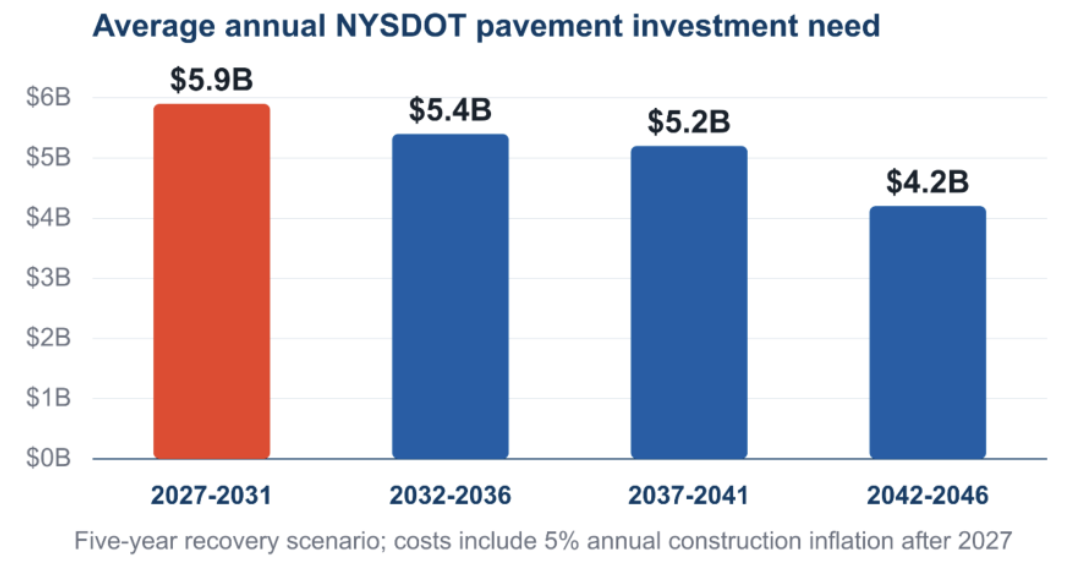
Average annual investment need declines from $5.9 billion in the first five-year recovery period to $4.2 billion in 2042-2046. Source: Applied Pavement Technology, Inc., NY 20-Year Pavement Needs Report.
“This is a pavement-management analysis, not an inflation adjustment or a simple projection of prior spending,” said Fred Hiffa, a consultant to Rebuild New York Now and former NYSDOT First Deputy Commissioner who oversaw the department’s 11 regional offices and capital-program delivery. “It applies NYSDOT’s own engineering approach across the State system, models deterioration and selects condition-appropriate treatments region by region. The result is a clear recovery path: make the larger investment now, reduce the backlog and lower the long-term annual cost of preserving the network.”
How the study was developed
Applied Pavement Technology used NYSDOT’s 2024 pavement-condition dataset obtained through the Freedom of Information Law and applied the agency’s condition-rating and treatment framework to the full NYSDOT-maintained network. The model establishes a state-of-good-repair target of no more than 2% Poor Interstate pavement and 5% Poor non-Interstate pavement, estimates the work required to reach that target and then calculates the ongoing preservation needed to sustain i
The five-year scenario totals $103.5 billion over 20 years. Extending the recovery to ten years lowers the initial five-year requirement but raises the modeled 20-year total to $105.0 billion, illustrating the long-term cost of delaying necessary renewal work.
A statewide need with regional consequences
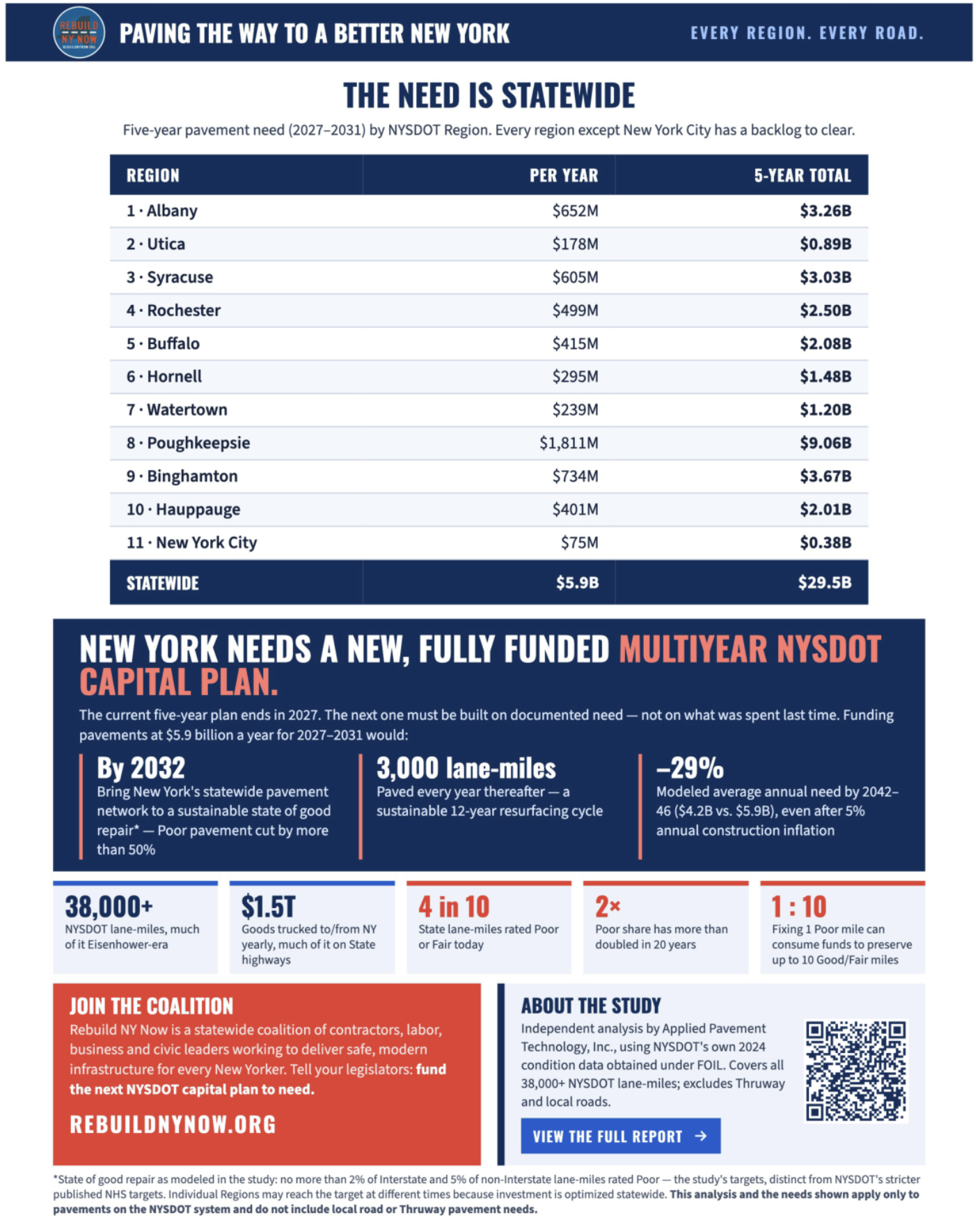
Every NYSDOT region faces substantial pavement investment needs over the next five years. The study provides a regional roadmap for elected officials and the public to link statewide funding priorities to local roadway conditions, economic activity, and the communities that depend on them.
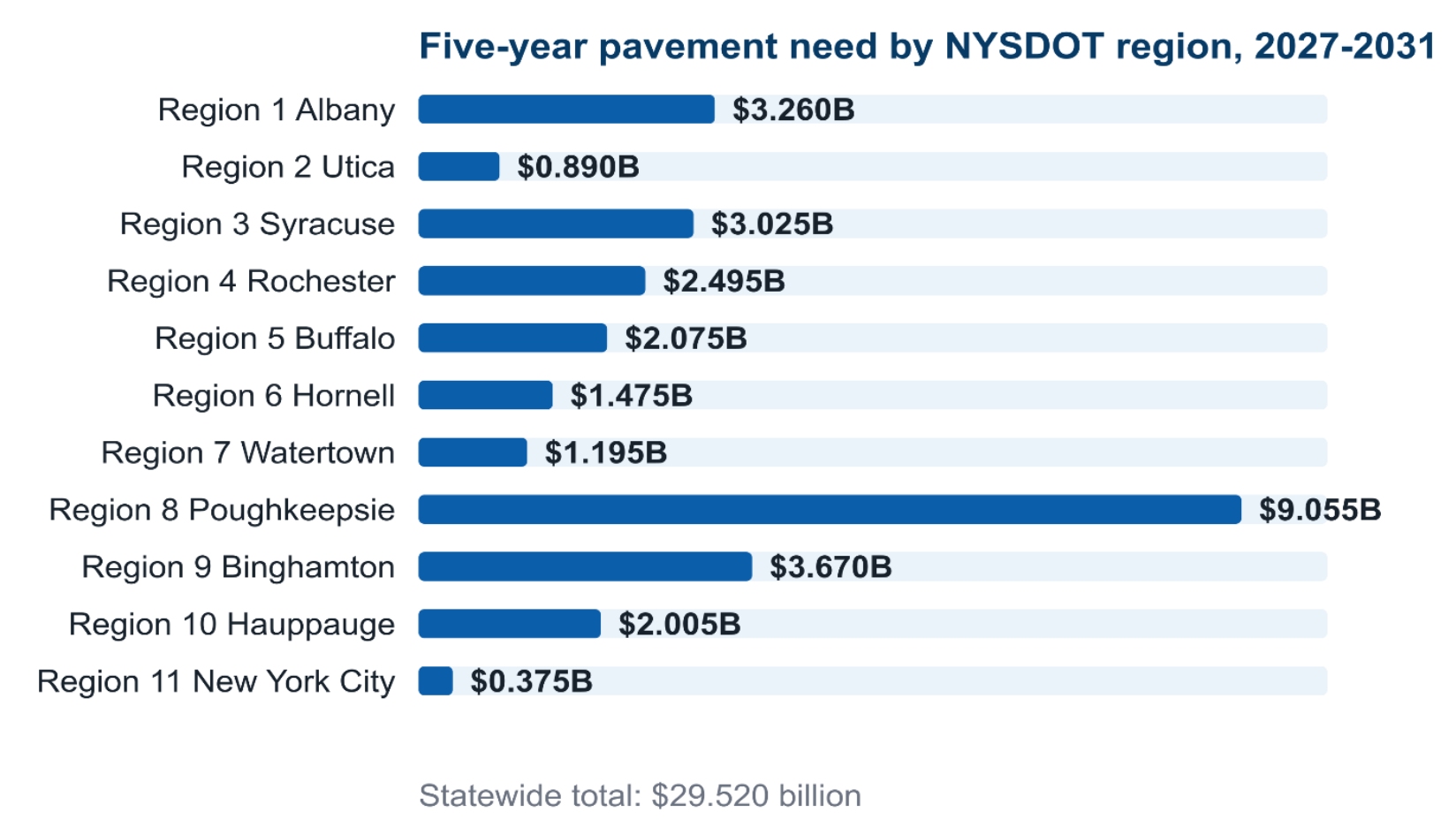
Five-year modeled pavement need by NYSDOT region, 2027-2031. Figures may not sum because of rounding. Source: Applied Pavement Technology, Inc., NY 20-Year Pavement Needs Report.
“The true measure of a capital plan is not how much it spends, but the results it delivers for New Yorkers,” said Ron Epstein, former NYSDOT Executive Deputy Commissioner and Chief Financial Officer, who oversaw the department’s financial, policy and planning functions, including the development of multi-year capital plans. “This study demonstrates that a strategic, front-loaded investment can reverse pavement deterioration, improve highway conditions, enhance safety and strengthen New York’s economic competitiveness – all while reducing long-term infrastructure costs.”
Rebuild New York Now calls for a results-based capital plan
Rebuild New York Now is calling on the Governor and Legislature to use the engineering-based findings as the pavement foundation for the next five-year NYSDOT capital plan. The coalition said the State should fund the full five-year pavement need, publish annual condition and production benchmarks, and report whether investments are reducing the share of roads in Fair and Poor condition.
“New Yorkers depend on a safe and reliable network of roads and highways, and engineers are the ones who design it,” said John T. Evers, PhD, President and CEO of the American Council of Engineering Companies of New York (ACEC New York). “Rebuild New York Now’s study makes the case for sustained public investment in the pavements that keep millions of New Yorkers safe every day. We applaud their work and stand ready to help deliver it.”
About Rebuild New York Now
Rebuild New York Now is a broad coalition of business, labor, transportation and community organizations committed to improving New York’s infrastructure and supporting the jobs, safety and economic growth that depend on it.
Study note: Costs are stated in 2027 dollars with 5% annual construction-cost inflation; regional attainment dates may vary as the model optimizes statewide investment. Read the full report.