
One State, Many Realities: Why New York Needs a Regional Impact Test
New York has always been a state of contrasts. From the density of NYC to the rural communities, our strength lies in that diversity. Yet too often, our policies are written as if those differences do not exist.
A straightforward question: Does a policy that works in one area of the state always work elsewhere? Because the truth is, it often does not.
New York already acknowledges regional differences in some meaningful ways. For example we do not have a single, uniform minimum wage. That recognition reflects a basic reality: the cost of living, economic conditions, and labor markets are not the same in every corner of this state.
In 2011, New York embraced regionalism through the creation of the Regional Economic Development Councils, aligning funding decisions with regional needs. That model has proven successful. Yet when it comes to statewide legislation, we lack a comparable mechanism.
Let’s examine the New York Climate Leadership and Community Protection Act (CLCPA). Let me be clear: I have not met a single person, upstate or downstate, who wants dirty water or polluted air. We share the same goals. A cleaner environment, a stronger economy, and a more sustainable future. But good intentions do not guarantee positive outcomes when policies fail to account for real world conditions.
In many upstate and rural communities, the electrical grid is not yet equipped to handle aggressive electrification mandates. Infrastructure is aging. Distances are longer. Tax bases are smaller. Workforce availability is more limited. When statewide policies assume uniform readiness, they risk doing more harm than good. They can drive up costs for families and small businesses, strain municipal governments, and ultimately slow the progress they are meant to achieve. Just as importantly, they can erode public trust.
We need a statewide policy related to climate, energy, or infrastructure that can evaluate regional factors including infrastructure readiness, economic capacity, workforce availability, geographic conditions, and municipal capability. Assessing and understanding the regional realities is transparency in action. If a policy places a disproportionate burden on a region, it must be revised, or paired with meaningful mitigation.
A ten-point regional impact framework gives us a clear and practical way to do exactly that. It asks the right questions up front: does each region have the infrastructure, economic strength, workforce, technology, and local government capacity to make a policy work? It also recognizes a simple truth: New York City and our rural communities do not have the same resources, and our policies should reflect that. Just as important, it ensures critical projects can move forward in every region by aligning expectations with local realities. This is also gives the state a clearer understanding of where support and investment are needed. In doing so, it keeps communities from getting stuck, meets the needs of today, and positions every region to build toward the future.
This is not about stopping progress; it is about making progress possible. If we want New York to lead on climate and infrastructure, we must lead with realism. That means recognizing that the path forward in NYC may look very different from the path forward in the North Country.
When we design policies that reflect the full spectrum of New York’s realities, we do not just move faster. We move together.
Too often, we frame this conversation as upstate versus downstate. The truth is, even within upstate, there are vast differences. So let us meet the challenges before us by acknowledging the realities that define New York’s diverse regions and localities. From Rochester to New Rochelle, Buffalo to Babylon, Plattsburgh to Plattekill, Lake Placid to Long Beach, and Ithaca to Islip, our policies must reflect local needs.
Whether addressing climate policy, energy mandates, or infrastructure, a one-size-fits-all approach simply does not work. If we are serious about delivering results, and moving New York forward, then our policies must be as diverse, dynamic, equitable and resilient as the people and communities they are meant to serve. I have long said you need to plan the work, and then work the plan. So let’s work together to make a plan that effectively serves the people of New York State.
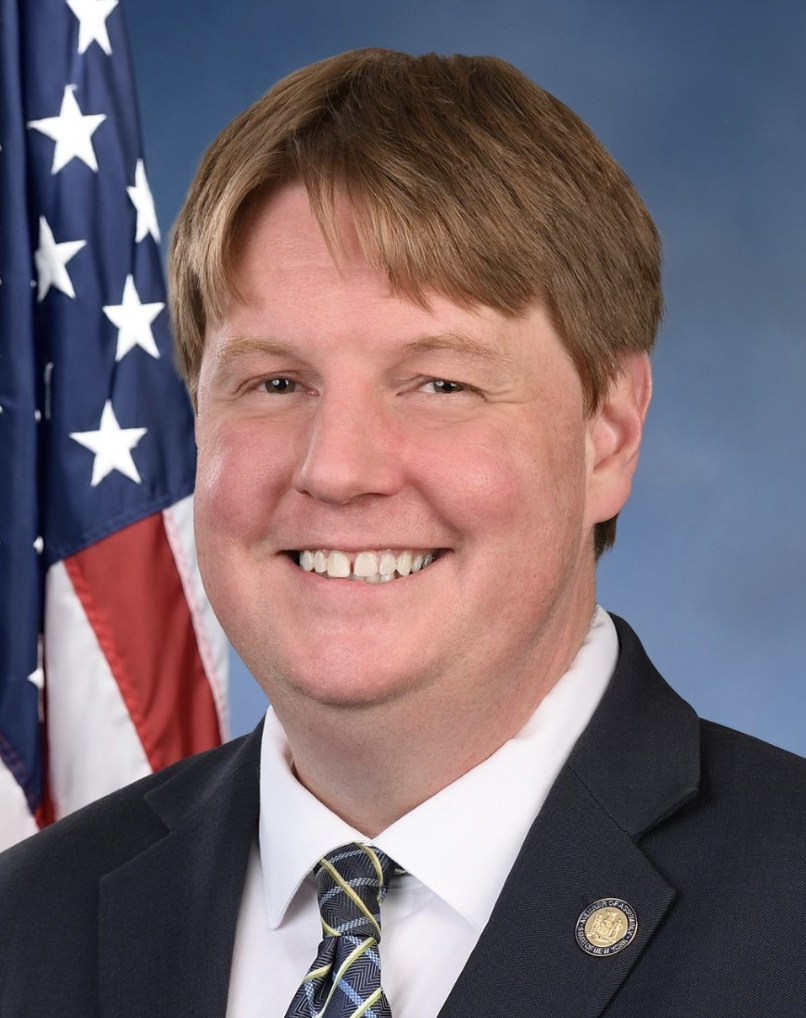
Assemblyman Michael S. Cashman, 115 District
