
In 2027, Let’s Invest in New York’s Crown Jewel of Environmental Expertise
When the state’s Department of Environmental Conservation (DEC) needs to know how the Adirondacks are holding up under recreation pressure, they call the SUNY College of Environmental Science and Forestry (ESF). ESF’s Adirondack Ecological Center helps run DEC’s Ecological Scorecard project. The Scorecard is a long-term monitoring effort meant to guide recreation and conservation in the Park. Its data also guide other state agencies, Adirondack advocacy groups, and local communities in their decision making.
This pattern repeats itself for many other areas of environmental management around the state. When we need research, monitoring, or training for environmental safety and sustainability, we turn to ESF Stumpies. This small university in the center of the state plays an enormous role in assuring our quality of life and resiliency. Its primary job, of course, is training students, but the faculty, staff, grad students, and many undergraduates also perform critical work helping the state achieve its environmental goals and benchmarks.
Founded as the state’s only forestry school and ranger school, ESF manages thousands of acres of forest properties and operates research stations in critical ecological regions of the state and pursues a mission of public service in everything it does. ESF scholars work closely with the Department of Agriculture & Markets on climate-smart practices for farms and forests, as well as training farmers in Agricultural Environmental Management to protect lakes and watersheds. ESF is a key resource for implementing the state’s landmark Climate Scoping Plan, the Governor’s 25 Million Trees program, mitigating heat waves in urban “heat islands,” and countless other efforts to build environmental resiliency in the state.
Here in Onondaga County, ESF graduates actively work with local governments on issues as diverse as reducing lead contamination, designing green infrastructure to mitigate flooding, and PFAS regulation. They also work in nongovernmental jobs that support our quality of life, whether managing land trusts, restoring native ecosystems and habitat, developing sustainable forestry plans, performing environmental quality reviews for construction projects, or teaching young people planting and landscaping skills.
Stumpies are hard at work everywhere in New York, because graduates of ESF are among the most likely to want to stay here, and they have an impressive 90% employment rate. Whether they attended the main campus or the Ranger School (which literally trains forest rangers, if your kids are looking for the coolest job), it’s highly likely that someone in your local water authority or waste management agency or fish hatchery was trained at ESF.
In short, the state of New York looks to ESF to provide a workforce and work products we rely on. That reliance has a price, and for now, the college is underpaid for its important contributions to the state. Currently, the school has about $26 million in contracts with state entities, including DEC, Agriculture and Markets, Transportation, Education, the Canal Corporation, NYSERDA and Parks. That seems like a lot, but it is a bargain, because the state compensates ESF at far lower rates than private consulting firms would charge. And it doesn’t account at all for uncompensated labor: if one of us asks ESF faculty to weigh in on legislation, they usually say yes. A consulting firm would bill that work at full cost without batting an eyelash. ESF absorbs the difference because of its commitment to public service.
We believe the state should put a higher value on that service.
Every year, the state spends billions on expensive contracts with consulting agencies. The Legislature has previously found that independent contractors command fifty to seventy-five percent more in compensation than state employees doing the same work, including benefits. That $26 million represents a savings to taxpayers of $13-19 million.
And yet, under the Cuomo administration, SUNY cut nearly $10 million a year from ESF, roughly a third of its operating budget at the time. The money had been allocated as “mission funding,” to acknowledge the unique expectations of the state’s forestry school and its management of thousands of acres of forest properties, along with its Cranberry Lake and Thousand Islands research stations.
That cut was never restored. The college has trimmed back and learned to do more with less, but we need the workforce they train and the research they do now more than ever.
We call on the state to restore the $10 million in mission funding to this exceptionally valuable institution. Yes, we are partial to a gem of a college and a major employer here in Syracuse that attracts students and faculty from around the world. (And yes, one of us is a proud 2-generation Stumpie.) But we are also mindful that continued cuts to ESF operating budgets could well lead to significantly higher costs to state taxpayers, if the necessary work of environmental research, monitoring, and training is to continue.
SUNY-ESF helps us have healthy forests and lakes, thriving fisheries, sustainable landscapes and building practices, cutting-edge research, and a dedicated environmental workforce. This is a mission worth paying for.
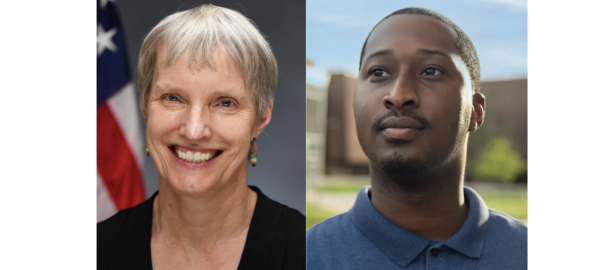
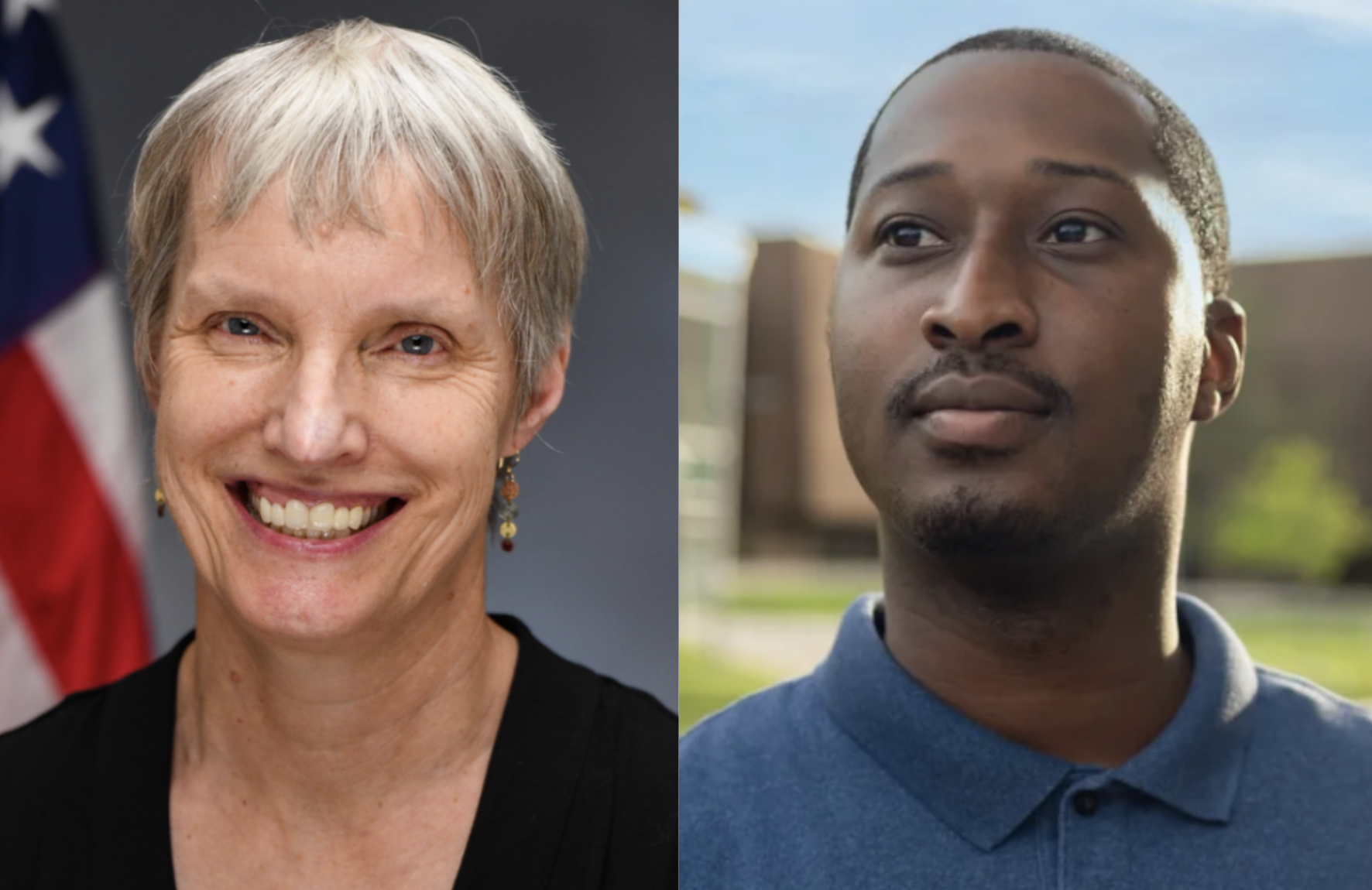
Rachel May represents the 48th Senate District and completed a Master’s in Environmental Science from SUNY-ESF in 2003. Maurice Brown represents Onondaga County’s 15th District in the county legislature and is the Democratic nominee for the 129th Assembly District.
