
Don’t take away physician appeal rights on insurer payments
On behalf of the 20,000 physician and medical student members of the Medical Society of the State of New York, we thank the State Senate and Assembly for rejecting a short-sighted state budget proposal that would have undermined access to care in New York’s already overstretched hospital emergency departments.
The proposal would have stripped physicians of their ability to appeal grossly inadequate insurer payments through New York’s Independent Dispute Resolution (IDR) process for emergency and other hospital-based care.
Removing this safeguard would discourage many medical specialists from continuing to provide essential care in emergency departments. High-acuity specialties such as neurosurgery, anesthesiology, radiology, and orthopedics must maintain around-the-clock availability. If reimbursement for delivering life-saving care is arbitrarily capped at Medicaid rates — often among the lowest in the country — many physicians will have little choice but to withdraw from hospital call panels.
That outcome would not punish insurers. It would punish patients.
When New York enacted its well-regarded surprise billing law, policymakers carefully designed the IDR process to ensure fairness for both providers and insurers. The state adopted a “baseball arbitration” model in which the arbitrator must choose one party’s proposed payment amount rather than creating a compromise. This structure encourages both sides to submit reasonable offers and helps maintain balance in resolving payment disputes.
Ultimately, these safeguards exist for one reason: to ensure patients have timely access to the emergency care they need.
The new budget proposal would tilt that balance in favor of the insurance industry by allowing it to place its thumb on the scale of dispute resolution. This comes despite the fact that insurers were recently called before Congress to answer for abusive prior authorization and payment practices that have already pushed many smaller community medical practices to the brink.
Insurers are now attempting to distract policymakers by highlighting a few outlier cases while ignoring the broader reality. Too often, insurers refuse to negotiate fair reimbursement with physicians, underpay for complex and highrisk emergency care, decline reasonable settlement offers, and force disputes into arbitration—only to complain publicly when they lose.
Why? Because attacking physicians diverts attention from the industry’s executive compensation, excessive administrative costs, and burdensome prior authorization requirements.
Health insurers have already built a system that heavily favors them. Now they are seeking to eliminate the last neutral mechanism that ensures physicians providing complex emergency care are fairly compensated.
The fact that providers frequently prevail in IDR cases strongly suggests that insurers’ initial payments are routinely far below what constitutes fair reimbursement for urgent and life-saving care. Any modest state budget savings from this proposal would be far outweighed by the risk it poses to patient access to skilled physicians—both in hospital emergency departments and in community-based practices.
For the sake of protecting patients’ access to urgent and emergent care, we urge policymakers to again reject this proposal as they finalize the state budget.
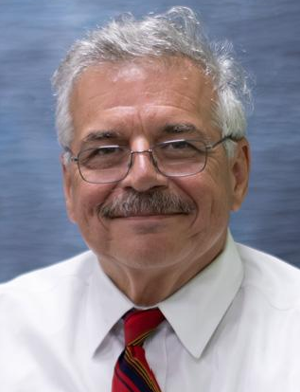
Dr. Mark J. Adams is president-Elect of the Medical Society of the State of New York.
*sponsored content*
