
New York Has Generous Paid Leave. Just Not for the Person Who Is Actually Sick.

Imagine you are a nurse in Albany, or a hotel housekeeper in Buffalo. You are pregnant, and your doctor has just told you to stop working for the safety of you and your baby. You have been paying into the state’s disability insurance system your entire working life. Now you need it.
New York sends you $170 a week. That’s $24 a day, in one of the most expensive states in the country, and with no guarantee your job will be waiting for you once you’ve healed.
New York’s Temporary Disability Insurance program, which workers rely on when they cannot work because of their own serious medical condition, has not been updated since 1989, making it older than some of the New Yorkers using it. Decades of inflation and a soaring cost of living have made the benefit nearly meaningless. Workers receive a check that can’t even cover groceries, and a silent message from the state: figure it out yourself.
Consider what New York’s Paid Family Leave offers: if a sick worker’s spouse takes leave to care for them, that spouse receives up to $1,228 a week in wage replacement along with stronger job protections than their ailing family member. The state has built a generous system for workers caring for loved ones while leaving the people who actually need medical care to fend for themselves with 98% less pay.
Women, especially new and expecting mothers, are disproportionately harmed by the program’s failures. Nearly 30 percent of TDI claims in New York are related to pregnancy and childbirth recovery, conditions that are also excluded from Paid Family Leave coverage. We’re talking about women on bed rest orders, recovering from C-sections, and navigating postpartum complications. Many of them work in retail, hospitality, and care, where $170 a week means hunger or eviction, so they go back to work against medical advice because they cannot afford not to.
Bad policy begets bad outcomes. When women are forced back to work before they’ve healed, the state eventually pays for it in neonatal ICU stays and emergency rooms. Mothers who are able to take paid leave reduce the risk of infant rehospitalization by 47 percent and their own postpartum rehospitalization risk by 51 percent. Paid leave is associated with lower infant mortality, healthier pregnancies, and fewer premature births, especially for families below the poverty line. Every $1,000 invested in paid parental leave generates more than $20,000 in long-term social benefits. If the moral case for taking care of this state’s mothers does not move you, let the math: there is a clear return on investment, and a steep price for inaction.
At Bobbie, we see this up close. We built an internal company culture and external brand around parents, yet we watch every day as American mothers make impossible choices because the policy designed to support them has failed. At Moms First, we have spent years organizing those same women. They are the voters who powered wins on child care funding, who turn out in suburbs and cities across New York with their voices and their votes, and who know, with precision, which lawmakers see them and which ones don’t.
Albany talks about affordability constantly. But affordability for families means a pregnant worker does not have to choose between her health and her rent, and a new mother recovering from surgery does not lose her job while she heals. Modernizing TDI is not a fringe ask. It is exactly the kind of structural investment that makes the difference between a state that actually supports working families and one that just says it does.
The good news is the solution is already written. Bipartisan bills, A.9571/S.172, have been introduced in both the State Senate and Assembly to modernize TDI by increasing wage replacement, strengthening job protections, and giving workers a real safety net when a medical crisis hits. We only need Speaker Heastie to schedule a floor vote. He should.
New York built one of the strongest Paid Family Leave programs in the country. We should be proud of that. But that program leaves a glaring hole for the workers who need time for their own medical recovery, and right now the state is asking its most vulnerable, often mothers, to survive on dollars a day. We should be ashamed.
The nurse in Albany and the housekeeper in Buffalo have been paying into this system their whole working lives. It is long overdue that the system paid them back.
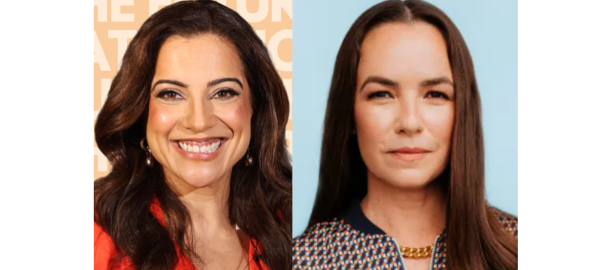
Reshma Saujani, Founder and CEO of Moms First, and Sarah Hardy, Co-founder and Chief People & Experience Officer of Bobbie.
*sponsored content*
